Dave Linthicum and I were on the ground at RSAC 2026 in San Francisco at the Moscone Center, and you could not pass anyone in the hallway without hearing the word AI at least 10 times.
While the exact final number of AI focused sessions was part of a broader agenda of more than 520 total sessions, AI was a dominant theme, with a heavy focus on agentic AI, securing AI systems, and AI driven threats. We visited with the NinjaOne team during the conference, and one of their key focus products at the event and in the security space was the NinjaOne Vulnerability Management platform, a module within their broader Endpoint Management suite. It automates vulnerability scanning, identifies risks, and streamlines remediation by integrating directly with NinjaOne Patch Management to patch Windows, macOS, Linux, and third party applications.
The platform provides real time software inventory, maps applications to CVEs and CVSS scores, and offers risk based prioritization. It detects outdated software, misconfigurations, and missing patches. We learned that the platform also allows for automated patching, which can reduce remediation time by up to 90%.
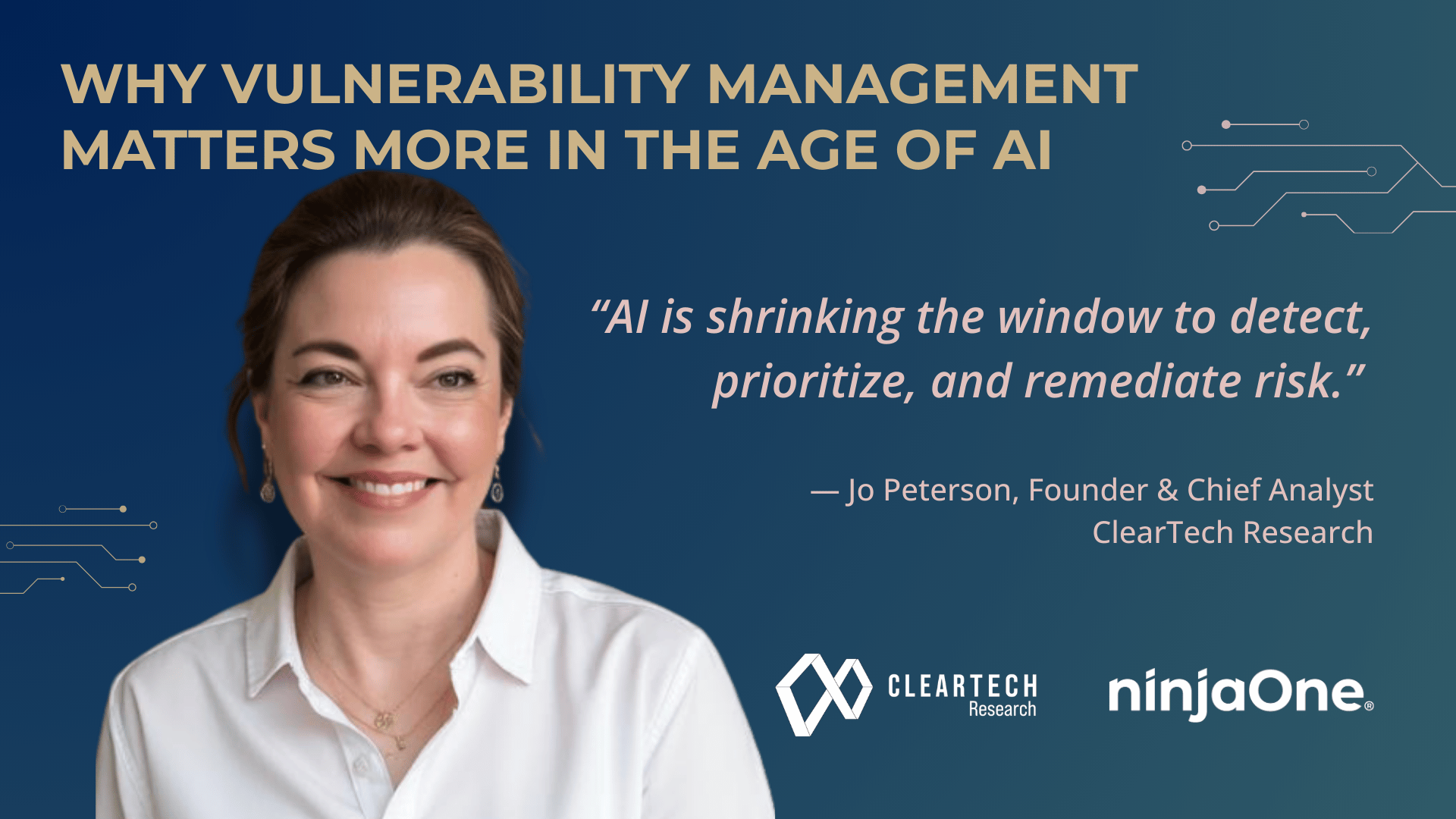
Vulnerability management matters more in the age of AI. AI accelerates the speed at which attackers find and exploit vulnerabilities, compressing the window for defense from days to minutes. It is also essential for securing new, complex AI-driven attack surfaces such as prompt injection, model poisoning, and data leakage that traditional tools cannot detect.
Viewed through the AI lens, there are five reasons vulnerability management matters more than ever.
Key Reasons Why Vulnerability Management Matters More with AI
· Weaponized Speed: Attackers use AI to rapidly identify, analyze, and exploit vulnerabilities, requiring defenders to use AI for faster, automated, and prioritized remediation.
· New Attack Surfaces: AI systems introduce unique risks, including prompt injection, model poisoning, and supply chain vulnerabilities in AI models.
· Managing Complexity and Scale: AI helps analyze large volumes of data, including logs, code, and configurations, to identify, prioritize, and fix vulnerabilities across diverse environments while reducing false positives.
· Shift from Reactive to Proactive: AI enables predictive capabilities that move security from reactive patching to proactive, continuous risk management.
· Reducing Operational Burden: AI helps cut through the noise of excessive alerts, allowing teams to focus on actionable threats.
Vulnerability management may be one of the most overlooked yet foundational aspects of cybersecurity strategy. Even though the process itself is routine in nature, patching carries hidden complexities, especially in large, diverse environments where applying a faulty patch can trigger new problems. Understanding not just when to patch, but how and what to patch, is central to reducing long-term risk.
Patching requires more than routine execution
During the product briefing, one of the more interesting elements that stood out to both Dave and me was a capability called patch sentiment. This feature is designed to scan online forums, social media, and technical channels to help organizations assess the real-world effects of newly released patches. This proactive approach enables teams to prioritize based on actual field experience rather than assumption, reducing guesswork and minimizing downtime.
But patching is only one piece of a larger trust framework. The rising wave of AI-powered phishing attempts, often tailored and highly specific, has outpaced the capabilities of many current security programs.
In conversations Dave and I are having with IT leaders, we are finding that many are now struggling to understand not only the scale of the threat, but also how to respond effectively.
We believe the focus for IT teams is shifting toward visibility into sensitive data, effective breach response planning, and greater transparency with customers and regulators.
IT leaders need visibility, efficiency, and reduced risk
From a business perspective, these IT leaders are looking for key value drivers such as reduced risk exposure. Automated vulnerability scanning and patching accelerate the remediation of vulnerabilities, minimizing the window of opportunity for cyberattacks. We are also seeing a pressing need for improved IT efficiency. The NinjaOne platform automates manual tasks, such as patching for both OS and third party applications, freeing up IT staff to focus on higher value projects.
Unified visibility is a drum IT teams rightly beat. They do not want to log into multiple systems. The NinjaOne platform provides a single, consolidated view of the entire IT environment. This simplifies management, improves compliance, and reduces the need for